
SEO and AIO: The Future of Search
“Blending traditional search optimisation with AI-era strategies for visibility, engagement, and growth.”
This session explores how marketers can optimise for both search engines and AI assistants, ensuring content remains discoverable in a shifting digital landscape. Practical tools, current theory, and actionable tactics are included.
INTRODUCTION AND CONTEXT
Why SEO is Changing
Traditional SEO still matters, but AI-driven discovery is transforming user behaviour.
Search is shifting from keywords and SERPs to conversational assistants and zero-click results.
In 2024–2025, 58% of consumers used generative AI for search tasks (Statista, 2025).
Defining SEO and AIO
SEO: Optimising for ranking in traditional search engines (Google, Bing, YouTube).
AIO: Optimising for AI-driven assistants and large language models (LLMs) (e.g., ChatGPT, Perplexity, Gemini).
Together, they form a dual strategy for discoverability.
THEORETICAL FOUNDATIONS
Information Retrieval Theory
Search engines index, rank, and retrieve information based on relevance.
AI assistants generate answers based on probability and context.
Marketers must optimise both structured content (SEO) and semantic relevance (AIO).
The E-E-A-T Framework
Experience, Expertise, Authoritativeness, Trustworthiness – used by Google and AI training models.
AI assistants are more likely to surface content that is well-cited, original, and credible.
Practical: Add author bios, sources, and unique insights.
KEYWORD STRATEGY AND CONTENT DISCOVERY
Traditional Keyword Research
Tools: SEMrush, Ahrefs, Moz.
Focus on:
High-intent long-tail keywords
Search volume vs. competition
Featured snippet opportunities.
Conversational Search Keywords (AIO)
Focus shifts from keywords to natural language questions.
Tools: AlsoAsked, AnswerThePublic, Perplexity.ai.
Example: Instead of “best running shoes,” users ask “Which running shoes are best for flat feet for marathon training?”
Building a Hybrid Keyword Strategy
Map transactional keywords (SEO) alongside conversational prompts (AIO).
Example:
SEO keyword: “CRM software pricing”
AIO query: “What’s the most affordable CRM for a 10-person marketing team?”
ON-PAGE OPTIMISATION
SEO On-Page Essentials
Metadata, headers, schema markup
Internal linking
Image optimisation and alt text
Page load speed and mobile-first indexing
AIO On-Page Techniques
Write in natural language with FAQs and clear question–answer formats.
Use structured data (schema.org) to help AI parse information.
Add evidence-based references so AI assistants can cite your content.
Content Depth and Breadth
SEO rewards topical authority (clusters of content around themes).
AIO rewards context-rich, multi-perspective content.
Build pillar pages with FAQs, case studies, and links to supporting posts.
CONTENT CREATION WITH AI SUPPORT
AI Writing Tools for SEO & AIO
Surfer SEO – content scoring against SERP competitors.
Frase – identifies gaps and recommends improvements.
NeuronWriter – optimises for semantic search.
Human + AI Collaboration
Use AI to draft, but refine with human insight, brand tone, and fact-checking.
Ensure compliance with transparency guidelines (e.g., disclose AI-assisted content if policy requires).
Human oversight strengthens E-E-A-T.
Example Workflow
Research keywords and AI queries (Ahrefs + Perplexity).
Draft with Frase or Surfer SEO.
Edit for voice and ethics.
Publish with structured data.
Track via GA4 + Search Console.
TECHNICAL SEO AND AI INDEXING
Technical SEO Musts
XML sitemaps
Core Web Vitals compliance
HTTPS security
Canonical tags
Still foundational for visibility in traditional search.
AI-Ready Technical Elements
Ensure content is crawlable by AI (open access vs. paywalls).
Use API-accessible formats where possible.
Implement Q&A schema to make information machine-readable.
PLATFORM-SPECIFIC STRATEGY
Google Search vs AI Assistants
Google SERPs increasingly feature AI overviews.
AI assistants (Gemini, Perplexity, ChatGPT with browsing) provide single-answer outputs.
Strategy: Create content optimised for direct citation.
YouTube and Video SEO
YouTube remains a top search engine.
Optimise with transcripts, keyword-rich descriptions, and chapters.
Future: AI assistants often recommend video results alongside text.
Social Search Optimisation
Gen Z uses TikTok and Instagram as search engines.
Use keyword captions, alt text, and native SEO tools.
Example: TikTok SEO – include keywords in on-screen text + spoken audio.
MEASUREMENT AND ANALYTICS
SEO Metrics That Still Matter
Organic traffic
Keyword rankings
CTR from SERPs
Bounce rate and dwell time
AIO Metrics to Introduce
Citation frequency in AI-generated answers (trackable with tools like ChatGPT Browse monitoring scripts).
Referral traffic from AI-powered search (in GA4, look for sources like Perplexity.ai).
Engagement with conversational formats (FAQ pages, chatbots).
Blended KPI Dashboard
Combine SEO + AIO metrics into one dashboard:
Awareness: Impressions + AI mentions
Consideration: Engagement rate + AI-driven referrals
Conversion: Leads and attributable sales from search/AIO
Tool: Looker Studio with API integrations.
RISKS AND FUTURE-PROOFING
Common Pitfalls to Avoid
Over-reliance on AI-generated content without review.
Ignoring accessibility and inclusivity in optimisation.
Keyword stuffing instead of focusing on user intent.
Failing to adapt to zero-click search realities.
Preparing for the Future
Voice search and multimodal AI (text + image + video).
Greater regulation on AI transparency.
Increasing emphasis on trust and verified sources in search ranking.
SUMMARY AND ACTION STEPS
Practical Next Steps for Marketers
Audit your SEO for basics: speed, metadata, structure.
Add an AIO layer: FAQs, conversational content, structured data.
Experiment with AI-focused keyword tools.
Create a blended KPI dashboard.
Review quarterly as search behaviours evolve.
Final Reflection
The marketers who thrive will master both SEO fundamentals and AIO adaptation, ensuring visibility wherever audiences search.
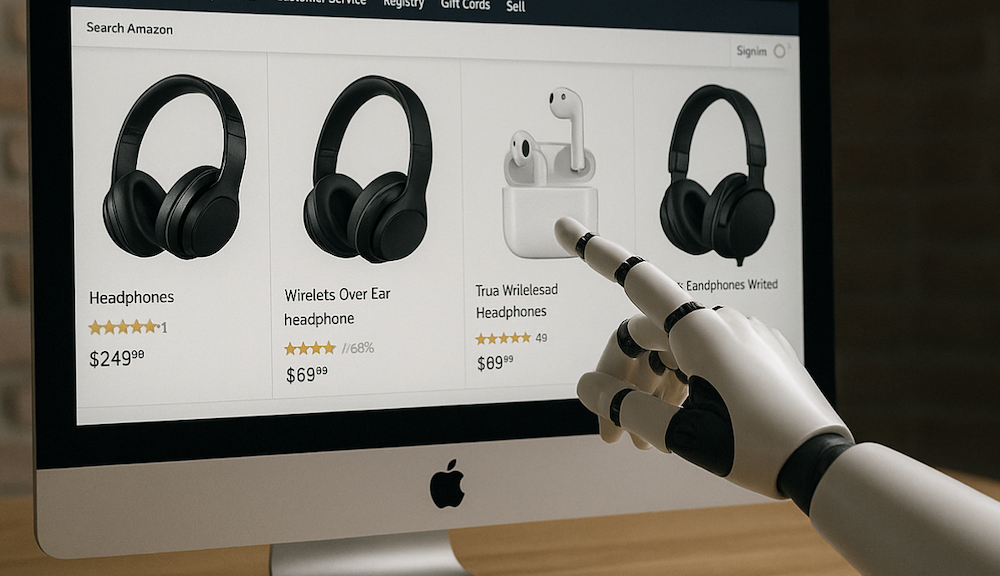
Search is now focusing on both our customers and the AI Agents they
have searching and making decisions, on their behalf.
More webinars like this at Cambridge Marketing College


